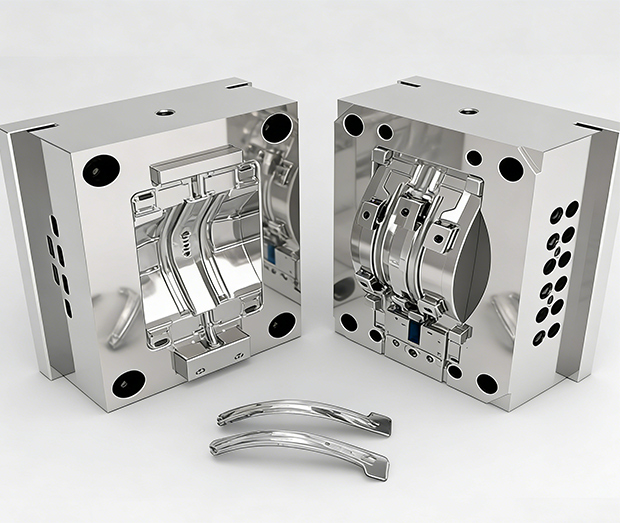
Plastic mold steel is a special steel designed specifically for plastic molding dies. It is widely used in plastic processing technologies such as injection molding, extrusion, and blow molding, serving as the "core tool" in modern plastic product manufacturing. Compared to cold work / hot work tool steel, the core requirements for plastic mold steel lie in excellent polishability, corrosion resistance, wear resistance, a certain level of strength and toughness, as well as superior machinability, rather than mere hardness and hot strength.
Core Features
Polishability & Mirror Finish: Mold cavities used for producing appearance parts (e.g., phone cases, transparent components) must be polishable to extremely high mirror grades (e.g., #A1, #A0). The steel must feature high purity, uniform microstructure, and freedom from micro defects.
Corrosion Resistance: Certain plastics (e.g., PVC, flame-retardant ABS, POM) release corrosive gases (chlorine, fluorine, sulfur, etc.) during molding. Corrosion-resistant steel prevents mold rust, maintains surface finish, and reduces maintenance costs.
Wear Resistance: Engineering plastics reinforced with additives like glass fiber are highly abrasive, requiring mold steel with higher hardness and wear resistance.
Machinability: Including machinability, etchability (for texture creation), and weld-repairability. Good machinability shortens the mold manufacturing cycle and facilitates modification and maintenance.
Dimensional Stability: The steel should exhibit minimal deformation during mold processing and long-term use to ensure mold precision. This depends on the heat treatment process and control of internal stress in the material.
Typical application areas
Typical Application Areas: Applied to injection molds, blow molds, vacuum forming molds, etc., serving the production of plastic products such as home appliance housings, automotive interior parts, medical consumables, and daily necessities.