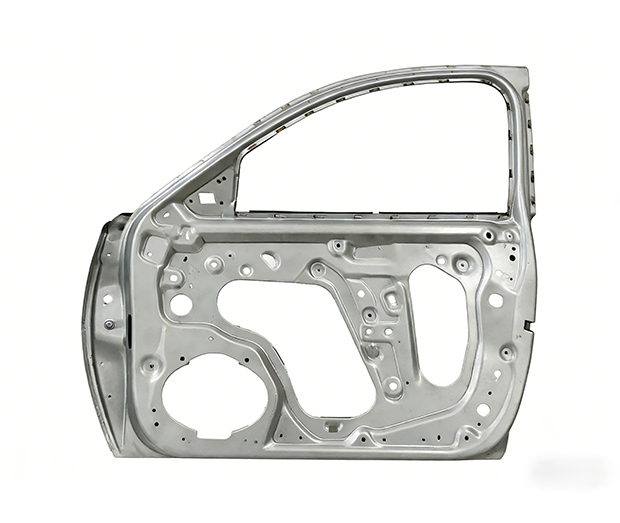
Cold work tool steel is the "forming cornerstone" of the cold working industry, typically operating at temperatures ranging from room temperature to 200°C. It must withstand high pressure, severe friction, and periodic impact from cold metals, directly determining the precision, surface quality, and production efficiency of cold-worked parts. It is widely used in automotive, electronics, hardware, precision manufacturing, and other fields.
As cold work dies endure enormous pressure, impact, friction, and bending forces during operation, their primary failure modes are wear, chipping, fracture, and plastic deformation.
Core Features
Ideal cold work tool steel must possess the following core properties:
High Hardness and Wear Resistance: Room temperature hardness of HRC 58–64, resisting wear during metal forming and extending die life.
Sufficient Toughness: Preventing brittle fracture under impact or fluctuating loads at room temperature.
Good Hardenability: Ensuring uniform hardness across large die sections to avoid localized performance deficiencies.
Anti-galling Properties: Reducing adhesion between the die and workpiece to ensure smooth formed surfaces.
Dimensional Stability: Minimal deformation after heat treatment to ensure long-term precision of the die.
Certain Fatigue Resistance: Resisting fatigue cracking caused by cyclic loading.
Typical application areas
Typical Application Areas: Covers room-temperature forming dies such as stamping dies, shearing dies, and cold heading dies, used in precision cold working scenarios for electronic components, automotive sheet metal, hardware accessories, etc.